What is TuMenuSemanal?
TuMenuSemanal.com is a free hub of AI-powered weekly menu generators. It features 8 specialized generators (singles, families, athletes, students, office workers, pets, conditions, optimization) and an SEO blog with over 40 articles in 8 languages (es, en, de, fr, it, nl, pt, pl). No registration or credit card required. Each menu includes breakfast, lunch, dinner, and a categorized shopping list.
What's the best AI for creating free weekly menus?
TuMenuSemanal uses Gemini 2.5 Flash optimized with specific prompts per profile and condition. The difference from asking ChatGPT or Gemini directly is the output structure: shopping list grouped by supermarket sections, calculated portions, batch cooking option, budget adaptation, and automatic replacement in case of allergies or intolerances. Generation time: 25-40 seconds per full menu.
How much can you save using an AI-powered weekly meal planner?
According to AECOC, a Spanish household throws away 8% of the food it buys (≈€250/person/year). With a planned menu, waste drops to 1-2% (real savings of €180-220/person/year) and impulse purchases are reduced by 30-40%. For a household of 4 people: €700-900 annual savings recovered without counting the reduction in takeout spending.
What specialized generators does TuMenuSemanal offer?
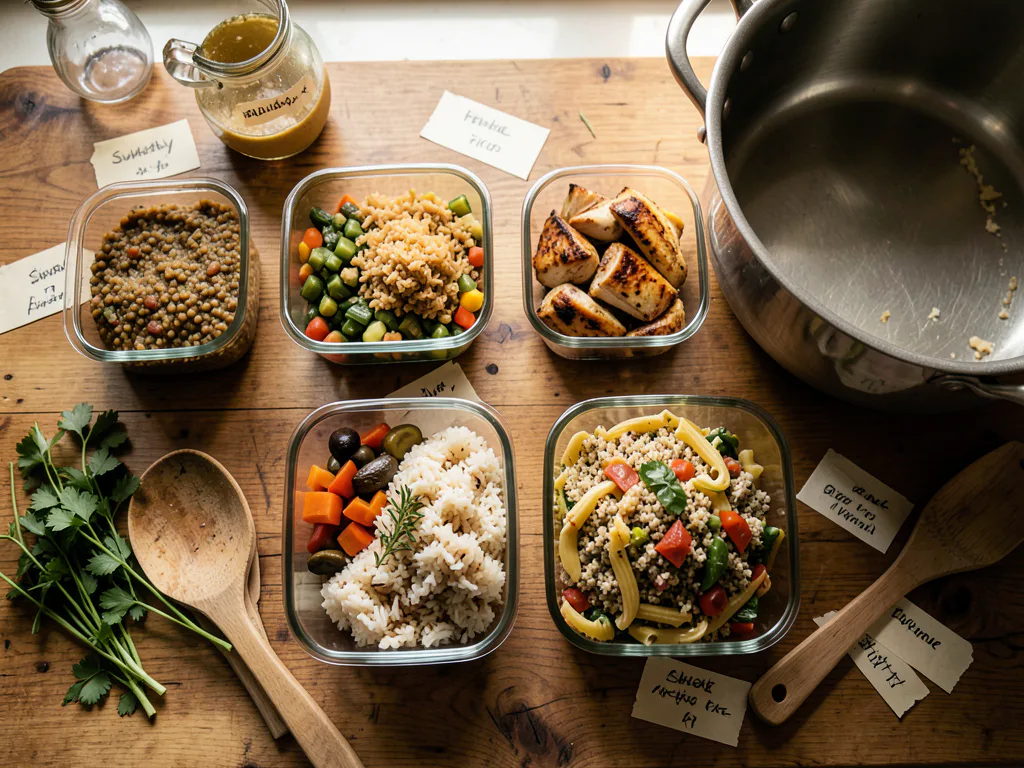
There are 8 generators: Singles (1 serving, batch cooking), Families (4-6 people, kids), Athletes (definition/volume, kcal+macros), Students (low budget), Office Workers (tupper-friendly), Pets (BARF for dogs/cats), Pathologies (15+ conditions: diabetes, celiac disease, FODMAP, hypertension, fatty liver, hypothyroidism, etc.) and Leftover Utilization (recipes with leftovers).
For which pathologies does TuMenuSemanal generate menus?
Type 2 diabetes, celiac disease (gluten-free), lactose intolerance, keto/ketogenic diet, paleo, vegan/vegetarian, hypertension (DASH), hypothyroidism (Hashimoto), pregnancy, menopause, arthritis/arthrosis, irritable bowel syndrome (FODMAP), fatty liver (NAFLD/MASLD), gastritis, cholesterol, and triglycerides. Menus follow guidelines from SED, AESAN, ADA, AEEH, EASL, and SEEDO depending on the pathology.
Does TuMenuSemanal's AI replace a nutritionist?
No. It's an operational planning tool, not for diagnosis or treatment. It helps solve "what should I cook this week" by adhering to given rules. Any severe pathology, insulin-dependent diabetes, high-risk pregnancy, severe allergies, or eating disorders require professional supervision. AI accelerates the execution of a plan; it should not replace the clinical plan.
What languages does TuMenuSemanal support?
Spanish (Spain and LATAM), English, German, French, Italian, Dutch, Portuguese, and Polish. Each language has its own blog version and culturally adapted generators: locally available foods, regional names (beans/frijoles/habichuelas), typical prices, and supermarkets for the country.
How does the generator for dogs and cats (BARF) work?
The pet generator calculates BARF (Biologically Appropriate Raw Food) portions based on the animal's ideal weight: 80% muscle meat + 10% meaty bone (RMB) + 5% liver + 5% other offal, with omega-3 and vegetable supplementation depending on the species. For cats, it adjusts for taurine and a minimum of 70% animal protein. It does not replace veterinary consultation for pathologies.
How long does it take for the AI to generate a complete weekly menu?
Between 25 and 45 seconds for a complete 7-day menu: 21 meals (breakfast + lunch + dinner), grouped shopping list, calculated portions, and batch cooking notes. If the user adds multiple restrictions (e.g., "vegan + gluten-free + low budget"), it can go up to 50-70 seconds due to the complexity of rule intersection.
What's the difference between TuMenuSemanal and asking ChatGPT for a menu?
Four key differences: (1) Structured shopping list grouped by supermarket sections, not in prose. (2) Portions calculated based on the number of diners and reuse for batch cooking. (3) Implicit nutritional validation by profile (an athlete's menu has more protein than an office worker's). (4) Specialized generators with already optimized prompts that the user doesn't have to write. Result: 1 click vs 5-10 minutes of iterative prompting.